
Law and Order: Criminal Intent
What really caught my attention were the impressive production values. Vincent D’Onfrio, the star of the show, is the title playable character, so his voice and personality are totally authentic. The gameplay is traditional point-and-click, but the puzzles along the way add variety and there are two distinct elements that make Law and Order unique among forensic games.
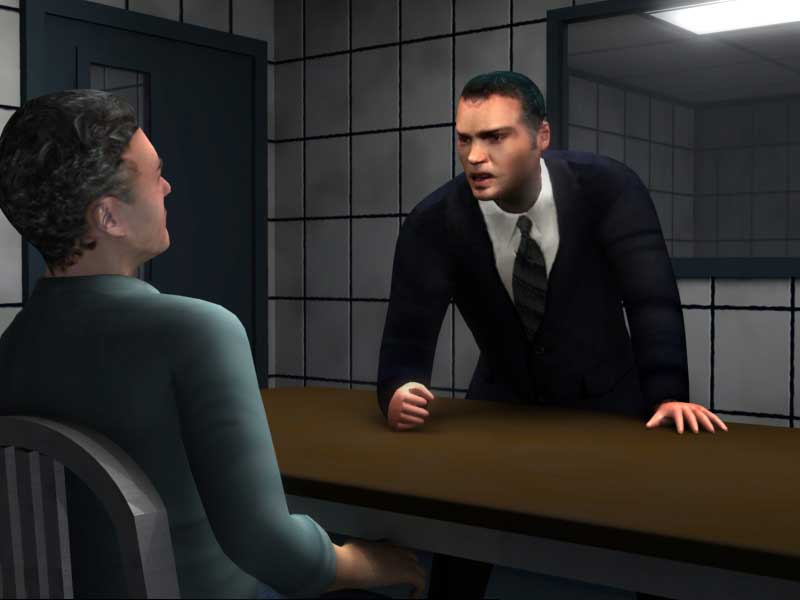
The first surprise is how you questions witnesses and suspects. Rather than choosing from a list of scripted questions and responses, you pick the topic of conversation (the victim’s personal life, job, car etc.) and then choose how to ask the questions. Depending on the person, you can approach them with honesty, deception, flattery or even intimidation.
If you say the wrong thing a red bar fills up, and if you hack off the suspect too much they’ll stop talking to you. Conversely, asking the right questions in the proper tone fills a green bar, prompting the suspect to provide you with crucial information like phone numbers. At one point I was able to corner a suspect with logic, and they had no alternative but to confess to the murder. This kind of conversational dueling is quite satisfying when you handle yourself like a hardened interrogation professional.
The game isn’t all talk, thankfully. While you’ll spend plenty of time grilling witnesses, you’ll do an equal amount of snooping. Gathering evidence from crime scenes takes a strong eye and keen mind, and some of the juicier bits are blocked by puzzles. Once you gain enough evidence, be it documents, personal possessions or photographs, you can enter all your data into a specialized computer program. This program builds a profile of the criminal, giving you hints to the personality and capabilities of the killer. It’s a big help, and keeps you from running in the infamous logic circle that plagues so many mystery games.
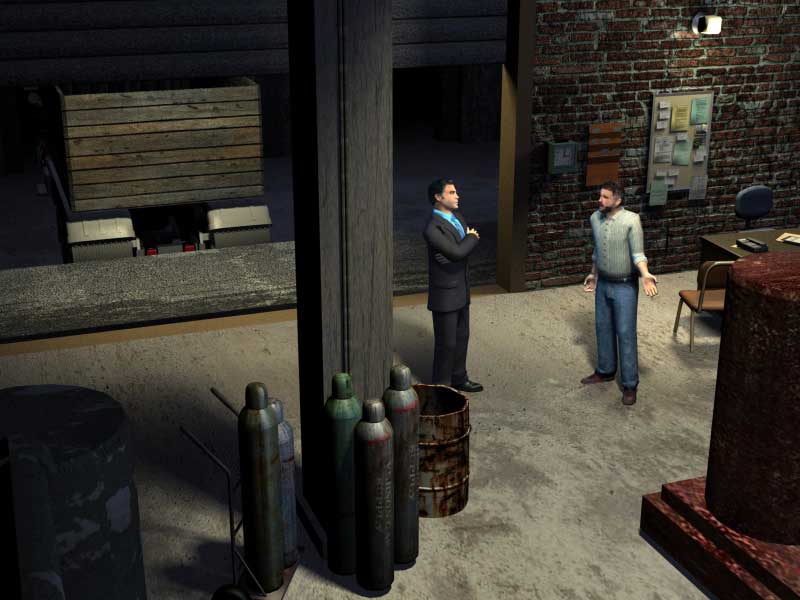
Criminal Intent’s gameplay is a healthy mix of interrogation and investigation, and feels nicely balanced against the visual style of the game. The perspective is third person; Detective Goren (played by D’Onfrio) and the NPC’s are all rendered in-game, while the backgrounds, environments and brief cutscenes are pre-rendered. Thus, most of the objects and scenes have a smooth, static appearance, although there was a river location that displayed impressive water effects.
Most of the game’s sound is subdued and at times bland, but D’Onfrio does an admirable job voicing Goren. The detective is suitably deadpan but alters his voice to appeal to (or threaten) suspects. Goren’s subtle, grim sense of humor shines through as well, often when he’s commenting to himself about evidence or suspects. Music is atmospheric and changes according to location, but repeats a little too much.
The only noticeable flaw in Criminal Intent is its rather numerous bugs. It tends to skip and stutter at times, which is perplexing considering how many pre-rendered elements there are in the game. Also, on more than once occasion, Goren got stuck on a wall or object in the world, and there was no way to remedy the problem short of rebooting the game. These problems are not terribly common, but are enough of an irritation to hamper the overall experience.
Despite these downfalls, however, Law and Order: Criminal Intent shapes up as a competent crime investigation simulator. Goren gets three cases to crack as well as final fourth murder, so this one will keep you playing for at least ten hours. Fans of the show will find a lot to like here, and casual gumshoes might get a charge out of it too.
Rating: 8 Good
* The product in this article was sent to us by the developer/company.


About Author
I've been gaming off and on since I was about three, starting with Star Raiders on the Atari 800 computer. As a kid I played mostly on PC--Doom, Duke Nukem, Dark Forces--but enjoyed the 16-bit console wars vicariously during sleepovers and hangouts with my school friends. In 1997 GoldenEye 007 and the N64 brought me back into the console scene and I've played and owned a wide variety of platforms since, although I still have an affection for Nintendo and Sega.
I started writing for Gaming Nexus back in mid-2005, right before the 7th console generation hit. Since then I've focused mostly on the PC and Nintendo scenes but I also play regularly on Sony and Microsoft consoles. My favorite series include Metroid, Deus Ex, Zelda, Metal Gear and Far Cry. I'm also something of an amateur retro collector. I currently live in Westerville, Ohio with my wife and our cat, who sits so close to the TV I'd swear she loves Zelda more than we do. We are expecting our first child, who will receive a thorough education in the classics.
View Profile