Of Dice and Men: Pathfinding
Written by Shawn Sines on 11/3/2009 for
More On:
Of Dice and Men
Edition wars are nothing new to video gamers.. as people maybe its inherent that we grow attached to things in our life.. it makes no sense why people cling so desperately to one game system over another or voraciously attack anyone who disagrees with their choice of system but it’s the state of Internet fandom, especially where games are concerned.
Why should traditional gaming be any different? Just as we have fanatic devotees to Halo or Sony or Nintendo, the traditional gaming world, especially role-playing games, there seems to be a similar tendency to cling to what we like.
You can find fans of games so obscure fighting it out with the latest Dungeons and Dragons 4th Edition converts discussing and often debating the merits of their Religion err.. gaming system.
Recently Wizards of the Coast made some fairly drastic design changes that moved away from the popular d20 based 3.5 version of the game. This change and a modification to the way the publisher allowed other companies to use their new system and its intellectual properties allowed third party publishers to create a rift in the already fractured RPG publishing market.
Among those who supported D&D and its spin off rules, the already small niche of role playing game books fracturing into an even smaller niche of publishers: those who continued to use the open source d20 rules to produce new products and those who accepted the more restrictive rules for moving to the 4th edition support role behind Wizards of the Coast.
One of the larger third party publishers, Paizo, a company made up of many of the creators of the 3rd edition of D&D and former publishers of Wizards’ Dungeon and Dragon magazines observed the shift in the larger publishers approach and decided that they would move in a different direction using the d20 rules as a basis.
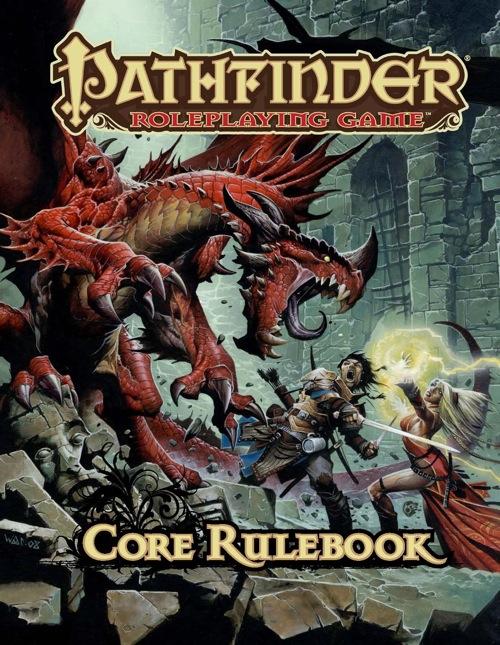
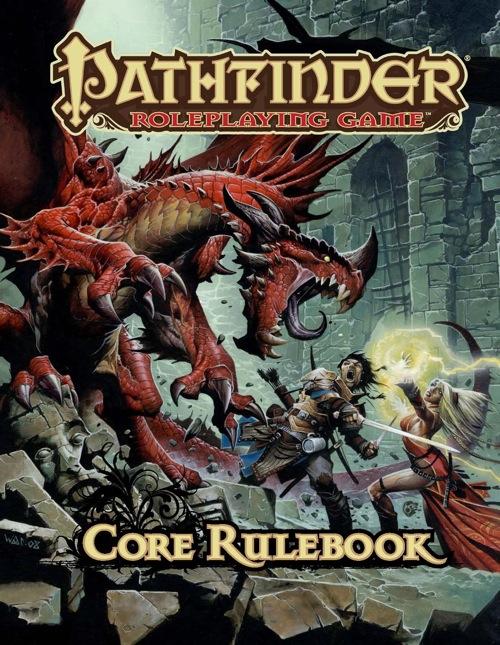
The product they created became a sort of hybrid enhancement of the established 3.5 version of Dungeons & Dragons titled Pathfinder. These new rules form a sort of D&D 3.75 and integrate a number of basic changes discovered through play testing and development over the ten years of version 3.x’s life.
Originally released as a free “Beta” test, Pathfinder’s initial drafts took fairly large steps away from some of the sacred cows of Dungeons & Dragons while working to maintain compatibility with all the established and printed D&D supplements and third party rules. Before the end of the book line, even Wizards’ own rules required some cleaning up and clarification, which led to the printing of a Rules Compendium to clarify things for the befuddled players and dungeon masters.
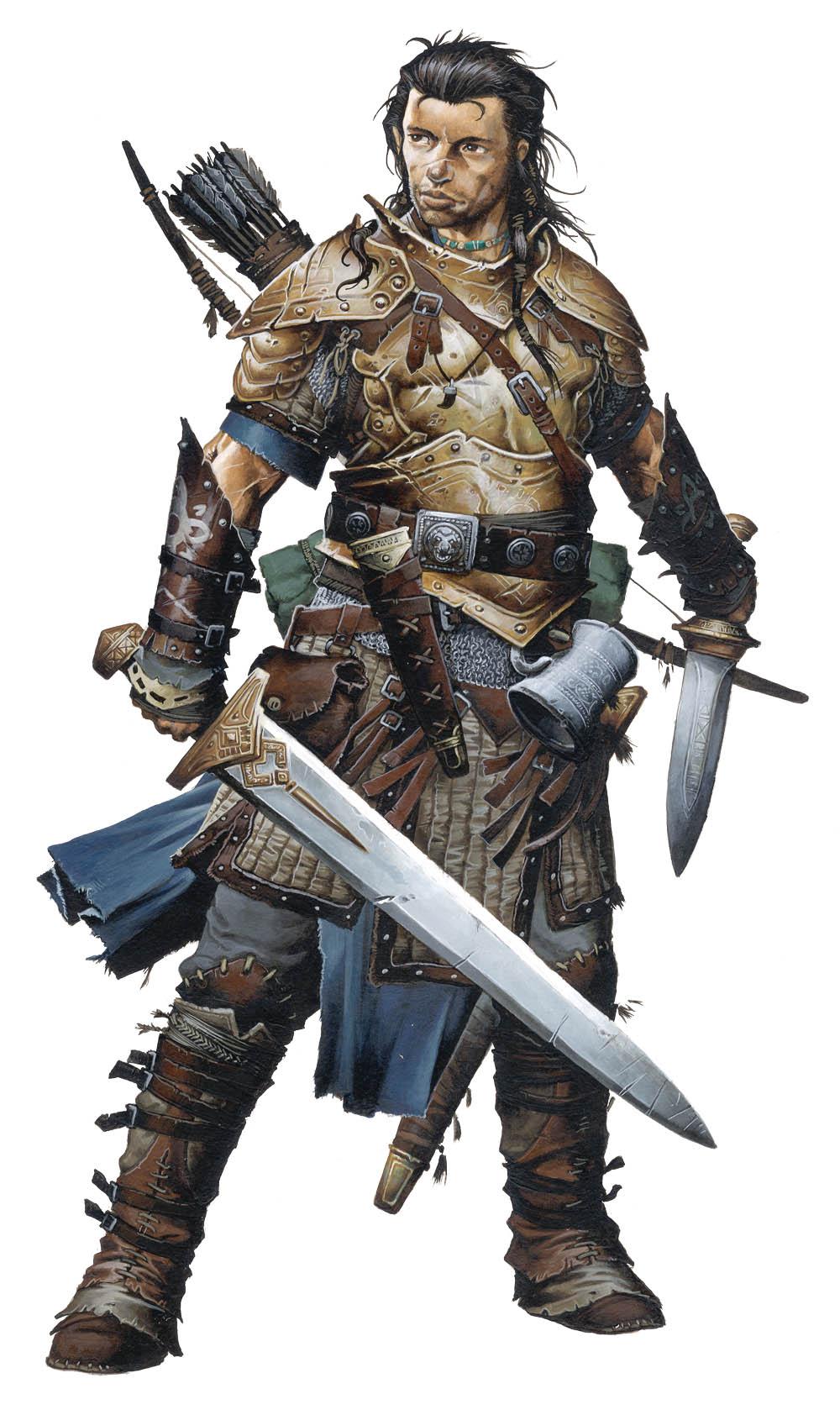
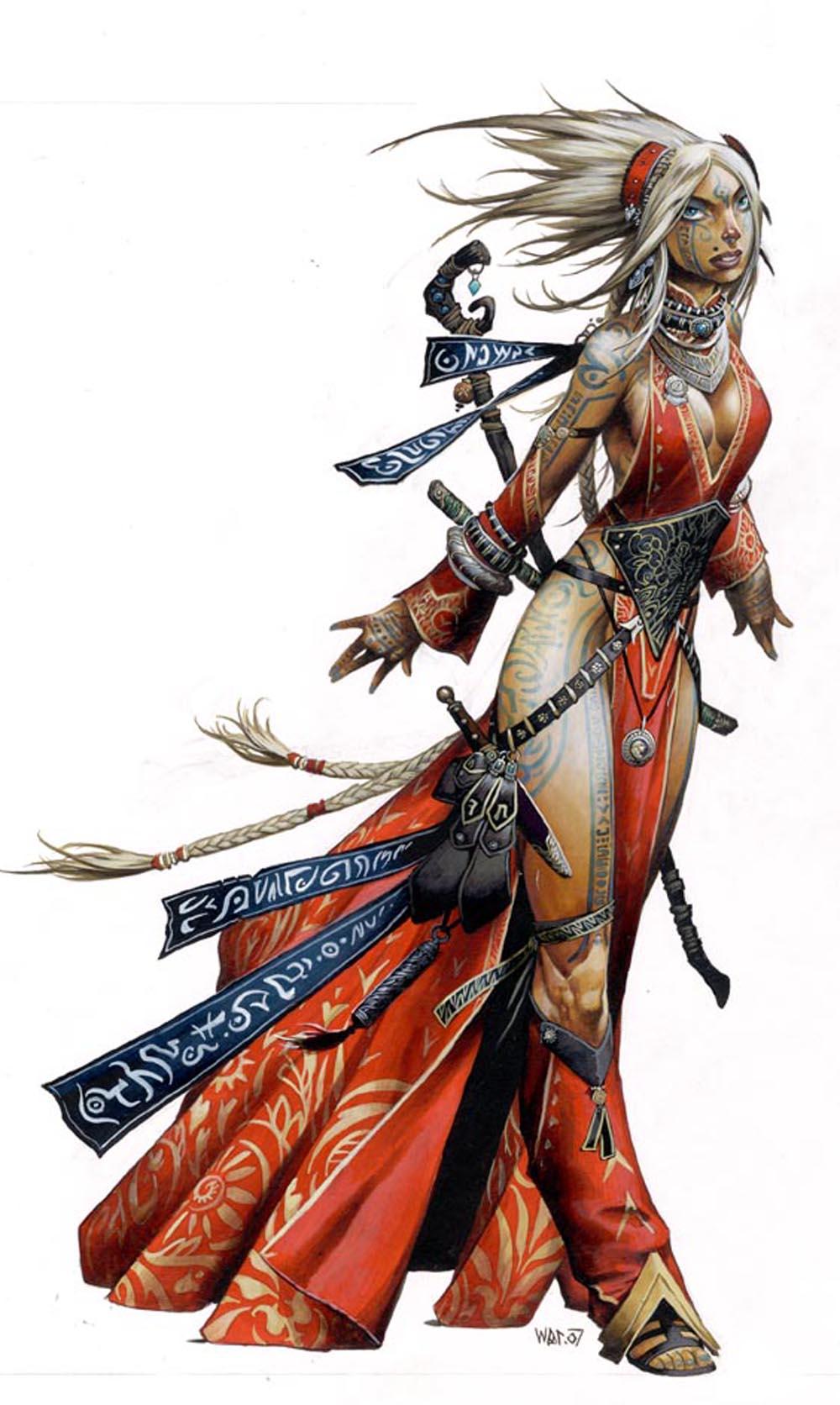
Pathfinder spent over a year in Beta until it recently premiered at the 2009 GenCon in Indiana. The resulting book however is different even from the free Beta rules and feels more like a return to 3.5 with some enhancements than a sea change revision.The new game still features many of the common conceits of Dungeons &Dragons – “Vancian” or memorized spells, the core classes of Fighter, Wizards, Rogue, etc. the typical fantasy races of elf, dwarf, man and half-elves and a combat system laden with modifiers and sometimes complex combat and situational rules.
Where Pathfinder makes changes to these conceits however is where it shines. Many of the core D&D classes received major reworking to balance their power progression out a bit more. Races in the game now see bigger statistical bonuses and racial abilities are tweaked to have a bit more impact over the life of the character, not just in the initial phases. Even humans, the traditional “no-bonus” races now get a selectable +2 statistic bonus increase to differentiate them and represent the versatility that the D&D system always implied was the defining trait of humanity in a fantasy setting.
These tweaks and changes are subtle enough that even those well versed with the d20 3.5 rules might have to do a double take to recognize them. Many of the choices made play well in the system and make it obvious that the Pathfinder designers were listening to D&D players and where possible attempted to address the oddities or uneven parts of the rule implementations.
Pathfinder is more than a rules tweek for D&D 3.5 though. With Wizards having moved on to their new rules, Paizo is aiming to capture the disenfranchised d20 players who were not interested in the fairly drastic changes to their beloved D&D without splitting the market with yet another rule system. One of the key design goals stated at numerous points in the games’ development – backward compatibility – is well maintained with this new game.
Before the Pathfinder game saw print Paizo worked to create a free D20/D&D 3.5 Conversion guide. This supplementary document is freely available on the Paizo website and covers all the core changes as well as giving guidance to Pathfinder GMs and players looking to move over characters, items and monsters from any of the d20/3.5 compatible products published by the many 3rd party companies over the years.
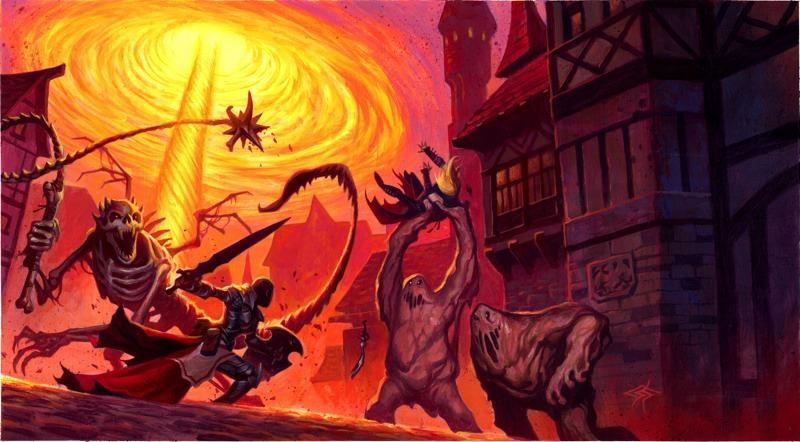
Pathfinder at this stage is fairly close to the last revisions made by Wizards of the Coast before they moved on to the new edition. There are hints however that while compatibility will be maintained that Paizo intends to expand the game and allow others to play in their sandbox and publish new rules and options that expand outside the more generic places Wizards stayed within during their development of the game system.
Fans of d20/Dungeons & Dragons 3.x should take the time to check out Pathfinder, while its not a “mandatory” upgrade to your existing games there are many rule tweaks and new ideas presented in the core rulebook worth considering and integrating into your home campaigns.
Why should traditional gaming be any different? Just as we have fanatic devotees to Halo or Sony or Nintendo, the traditional gaming world, especially role-playing games, there seems to be a similar tendency to cling to what we like.
You can find fans of games so obscure fighting it out with the latest Dungeons and Dragons 4th Edition converts discussing and often debating the merits of their Religion err.. gaming system.
Recently Wizards of the Coast made some fairly drastic design changes that moved away from the popular d20 based 3.5 version of the game. This change and a modification to the way the publisher allowed other companies to use their new system and its intellectual properties allowed third party publishers to create a rift in the already fractured RPG publishing market.
Among those who supported D&D and its spin off rules, the already small niche of role playing game books fracturing into an even smaller niche of publishers: those who continued to use the open source d20 rules to produce new products and those who accepted the more restrictive rules for moving to the 4th edition support role behind Wizards of the Coast.
One of the larger third party publishers, Paizo, a company made up of many of the creators of the 3rd edition of D&D and former publishers of Wizards’ Dungeon and Dragon magazines observed the shift in the larger publishers approach and decided that they would move in a different direction using the d20 rules as a basis.
The product they created became a sort of hybrid enhancement of the established 3.5 version of Dungeons & Dragons titled Pathfinder. These new rules form a sort of D&D 3.75 and integrate a number of basic changes discovered through play testing and development over the ten years of version 3.x’s life.
Originally released as a free “Beta” test, Pathfinder’s initial drafts took fairly large steps away from some of the sacred cows of Dungeons & Dragons while working to maintain compatibility with all the established and printed D&D supplements and third party rules. Before the end of the book line, even Wizards’ own rules required some cleaning up and clarification, which led to the printing of a Rules Compendium to clarify things for the befuddled players and dungeon masters.
Pathfinder spent over a year in Beta until it recently premiered at the 2009 GenCon in Indiana. The resulting book however is different even from the free Beta rules and feels more like a return to 3.5 with some enhancements than a sea change revision.The new game still features many of the common conceits of Dungeons &Dragons – “Vancian” or memorized spells, the core classes of Fighter, Wizards, Rogue, etc. the typical fantasy races of elf, dwarf, man and half-elves and a combat system laden with modifiers and sometimes complex combat and situational rules.
Where Pathfinder makes changes to these conceits however is where it shines. Many of the core D&D classes received major reworking to balance their power progression out a bit more. Races in the game now see bigger statistical bonuses and racial abilities are tweaked to have a bit more impact over the life of the character, not just in the initial phases. Even humans, the traditional “no-bonus” races now get a selectable +2 statistic bonus increase to differentiate them and represent the versatility that the D&D system always implied was the defining trait of humanity in a fantasy setting.
These tweaks and changes are subtle enough that even those well versed with the d20 3.5 rules might have to do a double take to recognize them. Many of the choices made play well in the system and make it obvious that the Pathfinder designers were listening to D&D players and where possible attempted to address the oddities or uneven parts of the rule implementations.
Pathfinder is more than a rules tweek for D&D 3.5 though. With Wizards having moved on to their new rules, Paizo is aiming to capture the disenfranchised d20 players who were not interested in the fairly drastic changes to their beloved D&D without splitting the market with yet another rule system. One of the key design goals stated at numerous points in the games’ development – backward compatibility – is well maintained with this new game.
Before the Pathfinder game saw print Paizo worked to create a free D20/D&D 3.5 Conversion guide. This supplementary document is freely available on the Paizo website and covers all the core changes as well as giving guidance to Pathfinder GMs and players looking to move over characters, items and monsters from any of the d20/3.5 compatible products published by the many 3rd party companies over the years.
Pathfinder at this stage is fairly close to the last revisions made by Wizards of the Coast before they moved on to the new edition. There are hints however that while compatibility will be maintained that Paizo intends to expand the game and allow others to play in their sandbox and publish new rules and options that expand outside the more generic places Wizards stayed within during their development of the game system.
Fans of d20/Dungeons & Dragons 3.x should take the time to check out Pathfinder, while its not a “mandatory” upgrade to your existing games there are many rule tweaks and new ideas presented in the core rulebook worth considering and integrating into your home campaigns.
* The product in this article was sent to us by the developer/company.

About Author
Shawn Sines is an avid game player who has been writing video game review and feature pieces freelance for over 9 years. He's served as the Hardware how-to writer, Mod and MMO expert, news writer and game reviewer for Filefront's Gaming Today, GameFront, The Columbus Dispatch, Columbus Alive and Columbus Parent in Columbus Ohio. He was also the co-host of GameOn! a video game podcast hosted by the Dispatch Media Group. Shawn's personal favorite genre are RPGs and Strategy, though at the latter he never claims to be very good despite hours of trying. View Profile
